
Module 3 — Literature Review
Generate structured review content based on a mind map strategy of your selected topics and cascading ideas. Link excerpts to write your content and beat plagiarism and AI writen content. Manage all sections and paragraphs with related contents through the Literature Map which shows all content and its related references. Organise your ideas and references into coherent paragraphs. Generate literature review content efficiently while maintaining academic style.
Literature Review - Gap Analysis
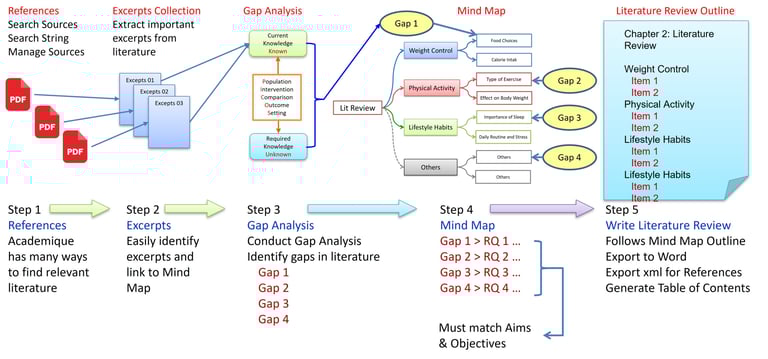
Academique has an elegant way to conduct and write Literature Review.
Gather References
Identify Excerpts
Conduct Gap Analysis
Create a Mind Map
Write Literature Review
Literature Review - Critical Analysis
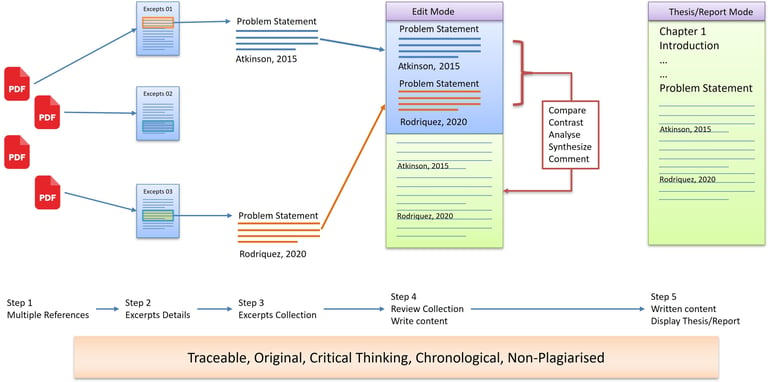
Academique has an elegant way to conduct literature review with critical analysis.
Multiple References
Excerpts Details
Excerpts Collection
Review Collection
Write Contents
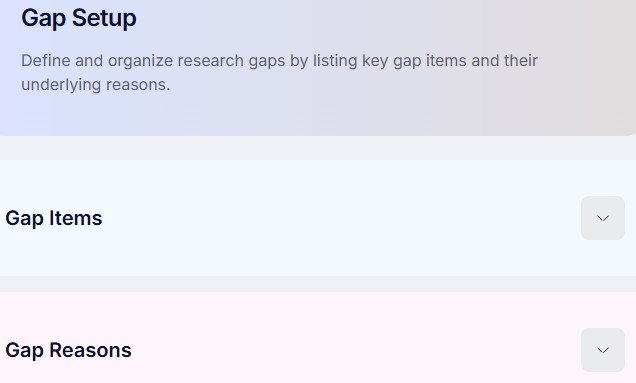
Gap Setup
There are many source details to begin looking for research articles. Many search domains are available for enhancing search.
HELP (Gap Setup)
Purpose: Define the areas where existing research is insufficient.
Action: Enter initial themes or concepts where knowledge is limited.
Outcome: A preliminary map of potential research gaps.
Next Step: Proceed to Research Gap to refine gaps.
Research Gap
Academique has an elegant way to conduct and write Literature Review.
HELP (Research Gap)
Purpose: Refine and specify precise gaps in literature.
Action: Analyse existing studies and highlight unanswered questions.
Outcome: Clearly identified gaps that can generate research questions.
Next Step: Move to Search Sources to find supporting references.
Search Sources
Academique has an elegant way to conduct and write Literature Review.
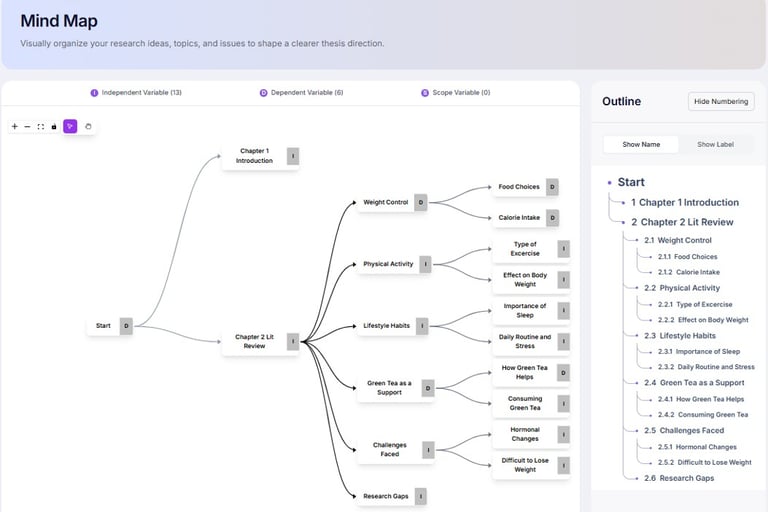
Mind Map
Create a structured visual outline of your literature review, organising key themes and subtopics while attaching extracted excerpts from sources directly to relevant nodes for systematic development.
The Mind Map provides a clear outline of the literature review that can be directly edited. Moving items in the Mind Map reorganizes the outline
HELP (Mind Map)
Purpose: Visually organise findings and research gaps.
Action: Create nodes for themes, sub-themes, and gaps.
Outcome: A clear structure for Literature Review sections.
Next Step: Move to Excerpts Collection.
Excerpts Collection
Create a
HELP (Excerpts Collection)
Purpose: Gather key excerpts from selected literature.
Action: Select relevant quotes or data points and tag by theme.
Outcome: A collection of organised excerpts ready for analysis.
Next Step: Proceed to Excerpts Details for deeper annotation.
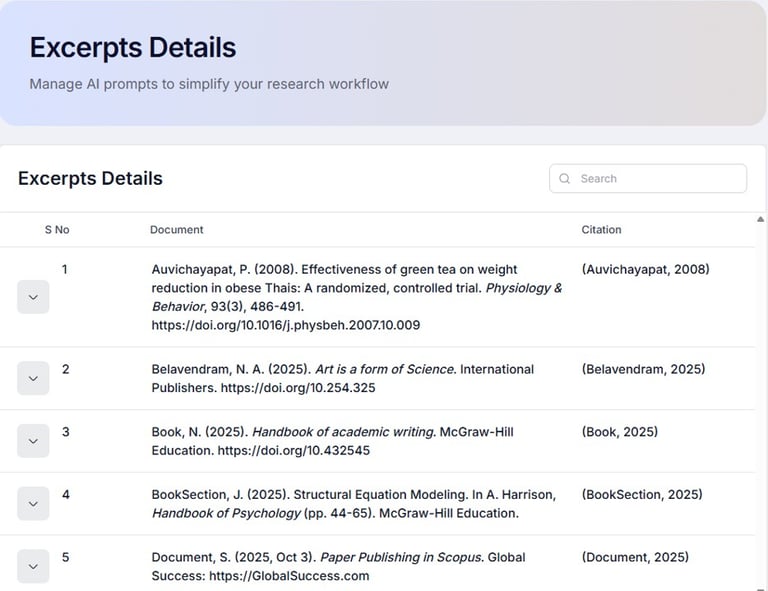
Excerpts Detail
View and manage all extracted excerpts in one place, with organised dropdown access by reference, enabling efficient review, comparison, and utilisation of supporting evidence during writing.
HELP (Excerpts Details)
Purpose: Annotate and categorise individual excerpts.
Action: Add comments, link to gaps, and assign source details.
Outcome: A detailed, searchable reference base of evidence.
Next Step: Move to Editor.
Editor
View
HELP (Excerpts Details)
Purpose:
Study Areas/Variables
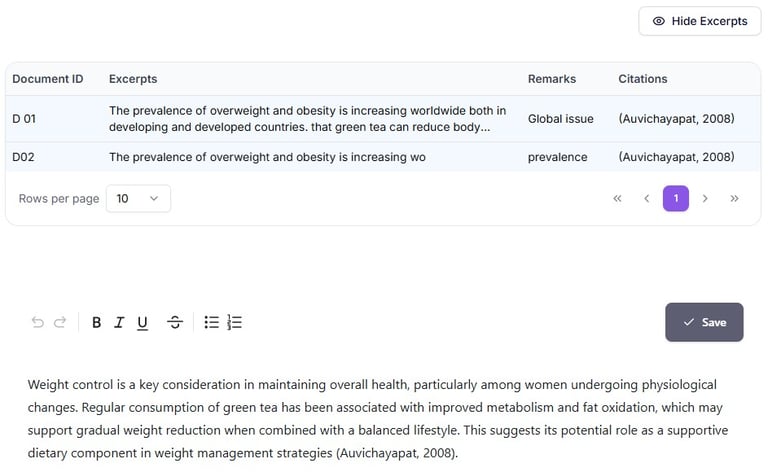
Sample Page with Detailed Excerpts
Access a detailed writing interface with linked excerpts for each node, allowing you to reference source material directly while composing and refining your literature review content.
HELP (Research Gap)
Purpose: Refine and specify precise gaps in literature.
Action: Analyse existing studies and highlight unanswered questions.
Outcome: Clearly identified gaps that can generate research questions.
Next Step: Move to Search Sources to find supporting references.
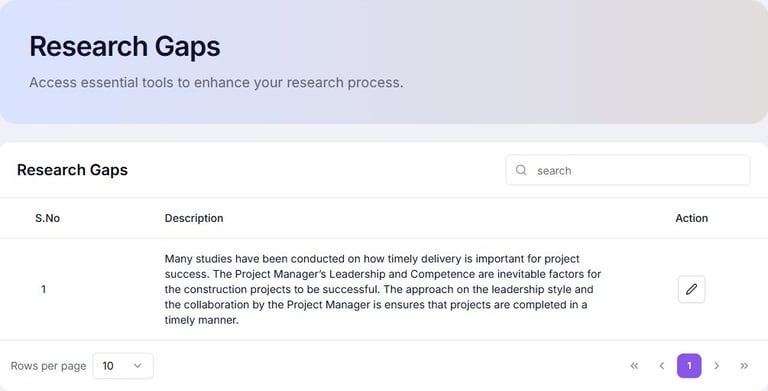
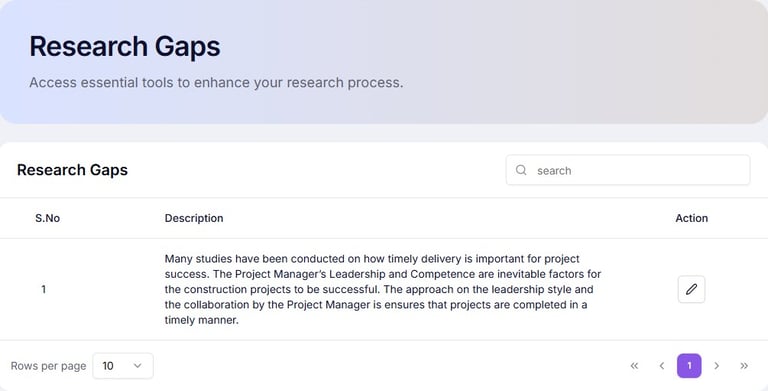
Research Gaps
Identify and document research gaps based on analysed literature, highlighting areas requiring further investigation and supporting the development of strong research questions and objectives.
HELP (Research Gap)
Purpose: Refine and specify precise gaps in literature.
Action: Analyse existing studies and highlight unanswered questions.
Outcome: Clearly identified gaps that can generate research questions.
Next Step: Move to Search Sources to find supporting references.
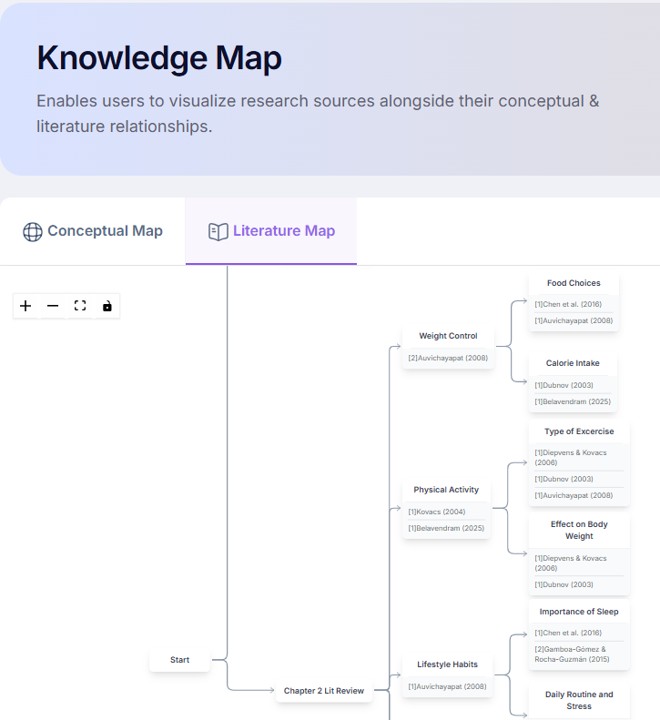
Knowledge Map
Visualise an enhanced version of your mind map, showing references and excerpt counts for each node. This helps you assess depth of coverage and identify well-supported and underdeveloped areas. This also shows nodes that are supported with references.
HELP (Knowledge Map)
Purpose: Show relationships between themes, variables, and gaps.
Action: Connect nodes visually to illustrate linkages.
Outcome: A conceptual overview of the study domain.
Next Step: Continue to Appendices or Summary.
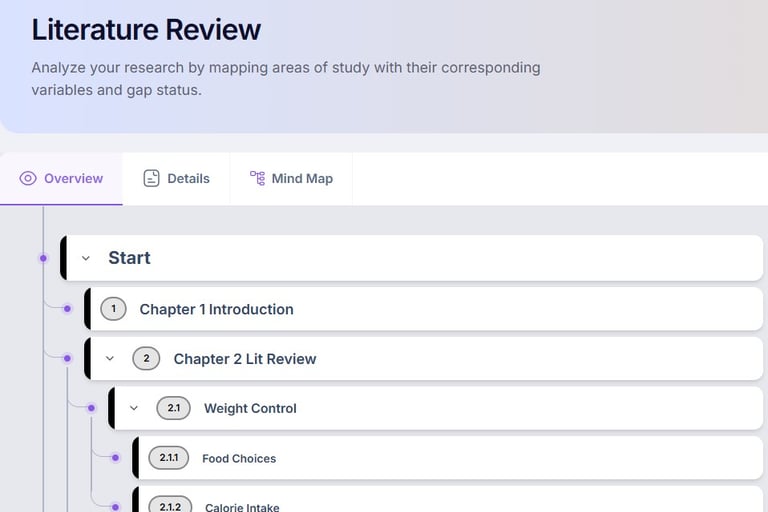
Literature Review
Develop your literature review using a structured outline, integrating themes, arguments, and references into coherent academic content aligned with your research objectives.
HELP (Research Gap)
Purpose: Refine and specify precise gaps in literature.
Action: Analyse existing studies and highlight unanswered questions.
Outcome: Clearly identified gaps that can generate research questions.
Next Step: Move to Search Sources to find supporting references.
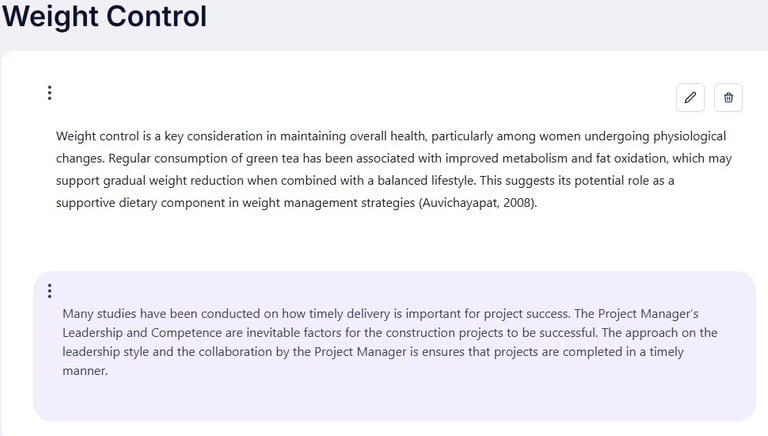
Sample Page with Content
View a sample literature review page demonstrating structured writing, providing guidance on how themes, arguments, and references are integrated into a clear and academically sound narrative.
HELP (Research Gap)
Purpose: Refine and specify precise gaps in literature.
Action: Analyse existing studies and highlight unanswered questions.
Outcome: Clearly identified gaps that can generate research questions.
Next Step: Move to Search Sources to find supporting references.
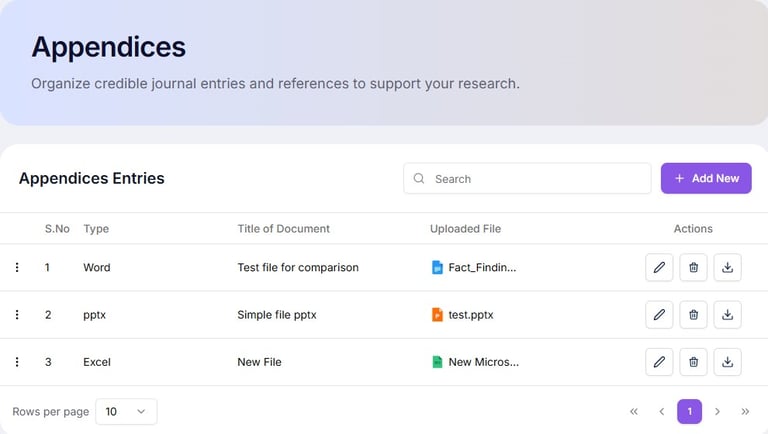
Appendices
Compile supporting materials, extracted data, and supplementary information in an organised format, ensuring completeness and transparency in your literature review documentation.
HELP (Appendices)
Purpose: Store additional supporting documents or evidence.
Action: Upload or reference supplementary materials.
Outcome: A complete repository of supporting evidence.
Next Step: Proceed to Summary.
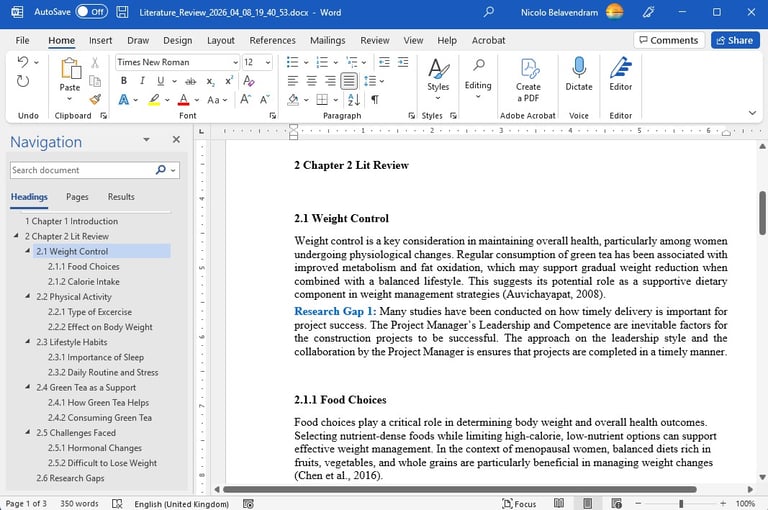
Sample Word Output
Preview a fully formatted Word document of your literature review, demonstrating how structured content is compiled into a professional academic format ready for submission or further editing.
HELP (Research Gap)
Purpose: Refine and specify precise gaps in literature.
Action: Analyse existing studies and highlight unanswered questions.
Outcome: Clearly identified gaps that can generate research questions.
Next Step: Move to Search Sources to find supporting references.
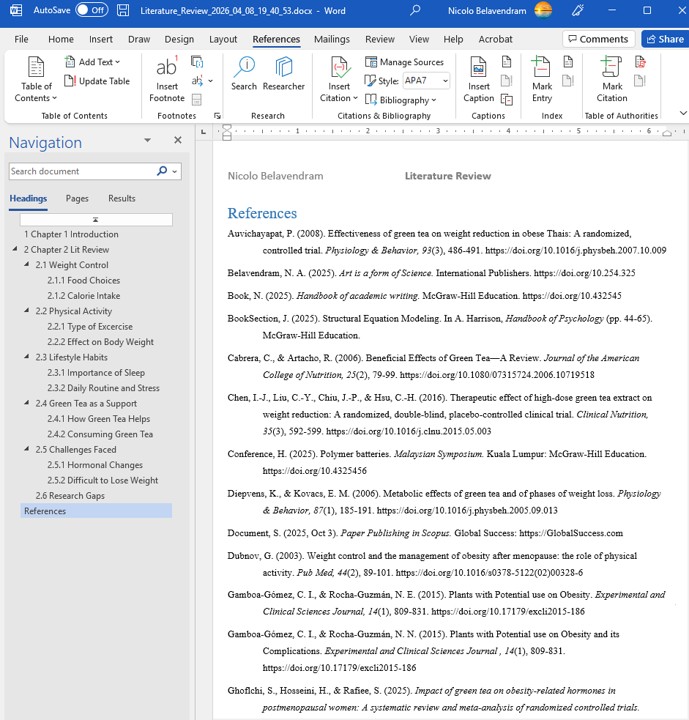
Sample Word Reference
Import and format references from XML outputs into a structured Word reference list, ensuring accuracy, consistency, and compliance with academic citation standards.
HELP (Research Gap)
Purpose: Refine and specify precise gaps in literature.
Action: Analyse existing studies and highlight unanswered questions.
Outcome: Clearly identified gaps that can generate research questions.
Next Step: Move to Search Sources to find supporting references.