
Module 1 — Fact Finding
Academique integrates research and report/thesis writing through the entire journey—from identifying a research topic to references, literature review and proposal writing—so you can focus on what really matters: producing high-quality research. Identify your research area, explore themes, and focus your study. Academique turns broad ideas into a defined research topic.
Overview of Fact Finding
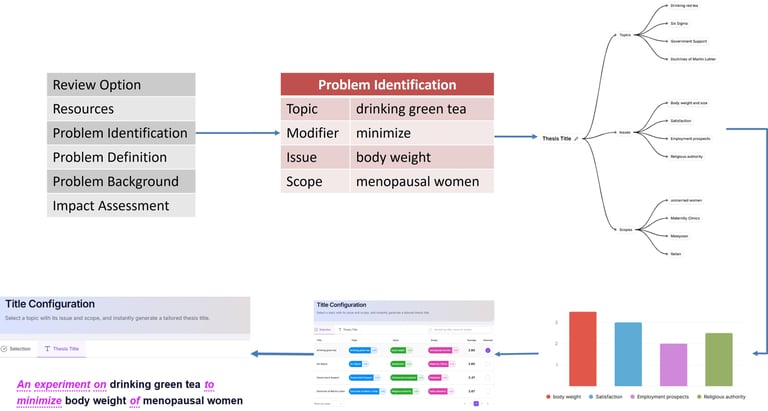
Academique has an elegant way to identify a topic of interest for you through Fact Finding.
Generate Ideas
Problem Identification
Mind Map of Ideas
Evaluation of Feasibility
Ranking of Ideas
Selection of Study Title
HELP (Problem Identification)
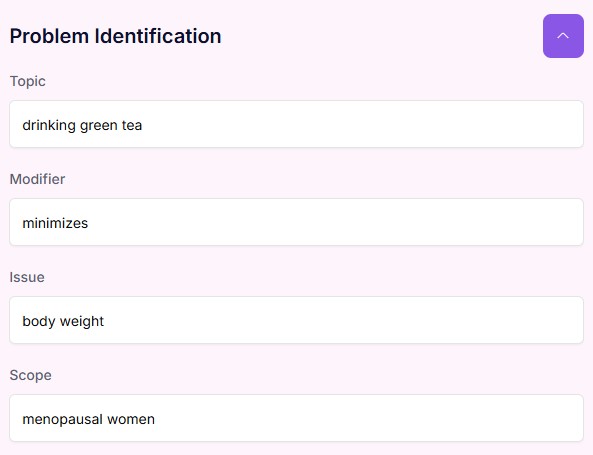
Purpose: Define a clear and researchable focus using Topic, Issue, and Scope.
Action: Enter a precise Topic, identify a real Issue, and define the Scope. Deliberate on your choices. Use short, focused phrases.
Outcome: A narrowed research direction and draft problem definition.
Next Step: Proceed to Mind Map to organise themes and sub-themes.
Problem Identification
Facts Entries: Identify and clearly define the a research area by analysing key issues, gaps, and context, ensuring a focused and meaningful direction for your study. Consider several research area options.
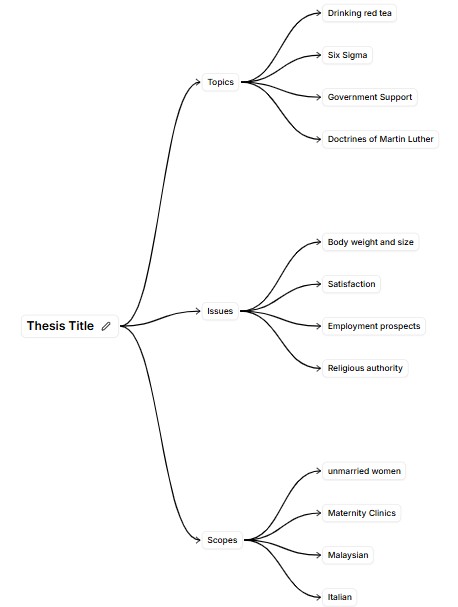
Mind Map of Topics, Issues, and Scope
Mind Map: For the potential research ares, visualise relationships between topics, issues, and scope using a structured mind map. This helps you organise ideas and understand factors related to your research. Deliberate on all options.
HELP (Mind Map)
Purpose: Organise your research focus visually into structured themes.
Action: Create main themes and sub-themes linked to your Topic, Issue, and Scope.
Outcome: A clear framework to guide your research structure.
Next Step: Proceed to Topic, Issue, Scope to refine focus.
HELP (Topic, Issue, Scope)
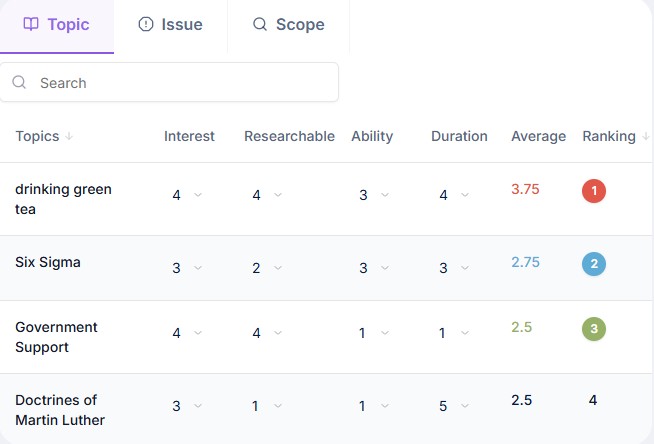
Purpose: Assess the feasibility of each Topic, Issue, and Scope using objective criteria.
Action: Enter numerical values for overall ranking of feasibility.
Outcome: A clear focus of the area for research direction according to feasibility.
Next Step: Move to Thesis Setup.
Topic, Issue, Scope
Facts Entries: Identify and clearly define the a research area by analysing key issues, gaps, and context, ensuring a focused and meaningful direction for your study. Consider several research area options.
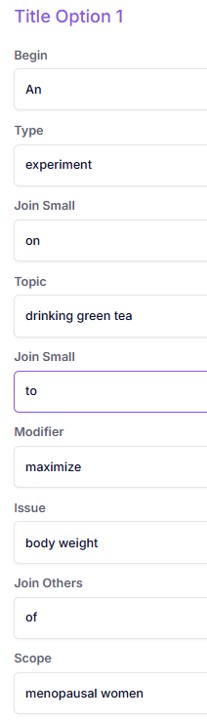
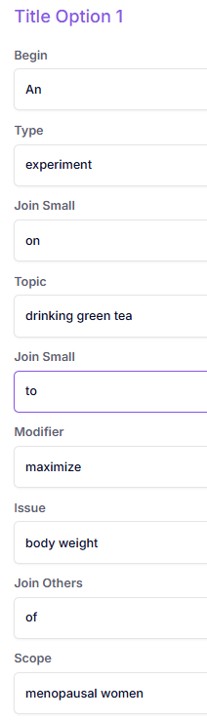
Thesis Setup
Generate refined research titles by combining key elements from your identified topics and issues, ensuring alignment with your research focus and academic intent.
HELP (Title Synthesis)
Purpose: Provide keywords used in the construction of the study title.
Action: Available options to synthesize the title using the drop down actions.
Outcome: A suitable thesis title that describes the study.
Next Step: Move to Title Cofiguration: Selection.
Research Topic Selection
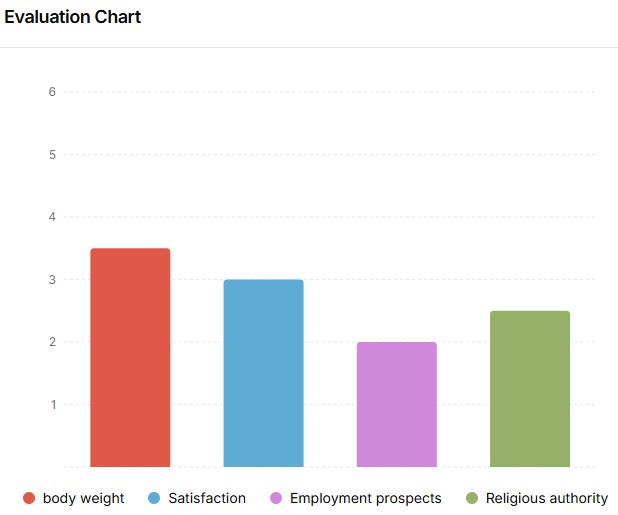
Graph of Importance (T, I, S): Evaluate and prioritise topics, issues, and scopes through a structured importance ranking that is graphed. This enables informed decisions on the most relevant research idea.
HELP (Research Topic Selection)
Purpose: Select the best research area and develop a precise and academic research title.
Action: Construct the thesis title wording to reflect the research topic, issue, and scope.
Outcome: Selection of a clear, researchable project title.
Next Step: Continue to General Aims.
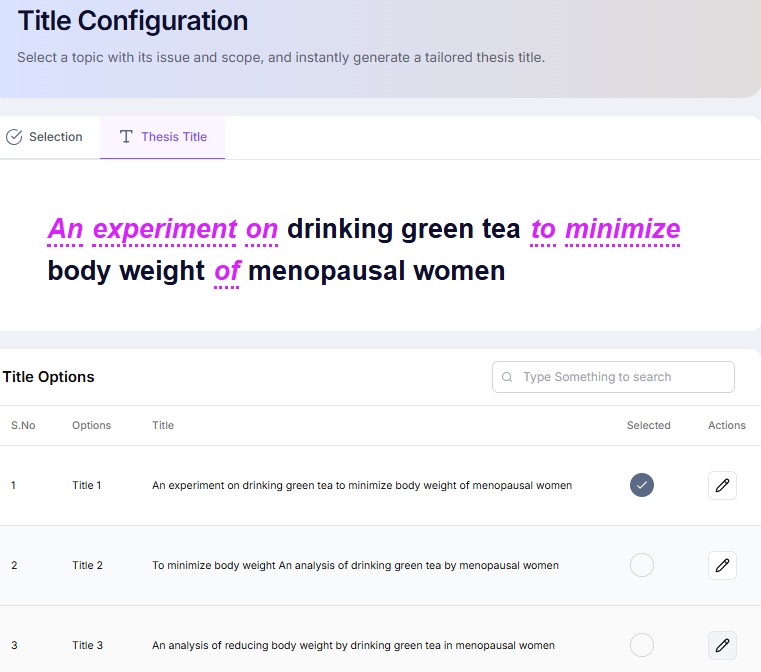
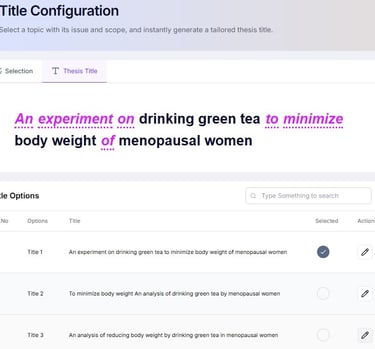
Title Configuration Selection
Create the most appropriate research title configured using the topic, issue and scope. This ensures your final title accurately reflects the purpose and direction of your study.
HELP (Title Configuration: Thesis Title)
Purpose: Establish the structural foundation of your project.
Action: Select project type and basic academic configuration.
Outcome: A structured research template aligned to your academic level.
Next Step: Proceed to Title Configuration.
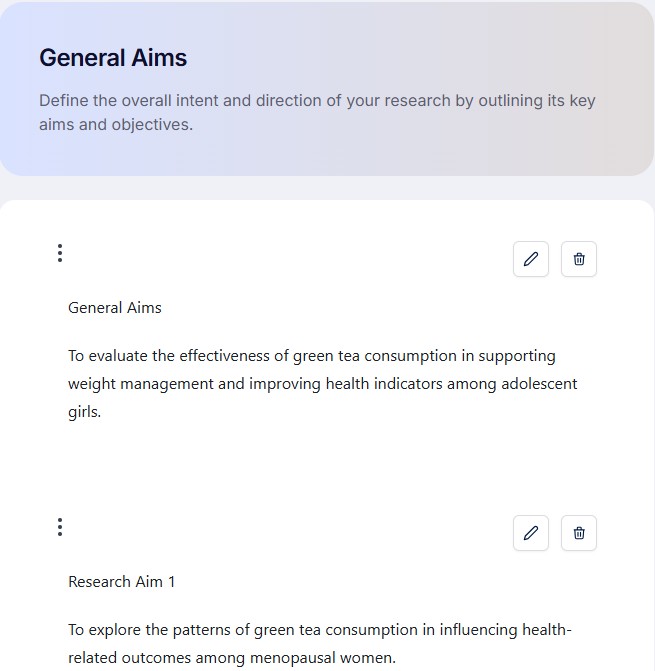
General Aims
Write general aims related to the study. All general aims and research aims specified here are available in other editors within Academique.
HELP (General Aims)
Purpose: Define the broad purpose of your study.
Action: Write a clear statement describing what the study intends to achieve.
Outcome: A focused general aim.
Next Step: Move to General Objectives.
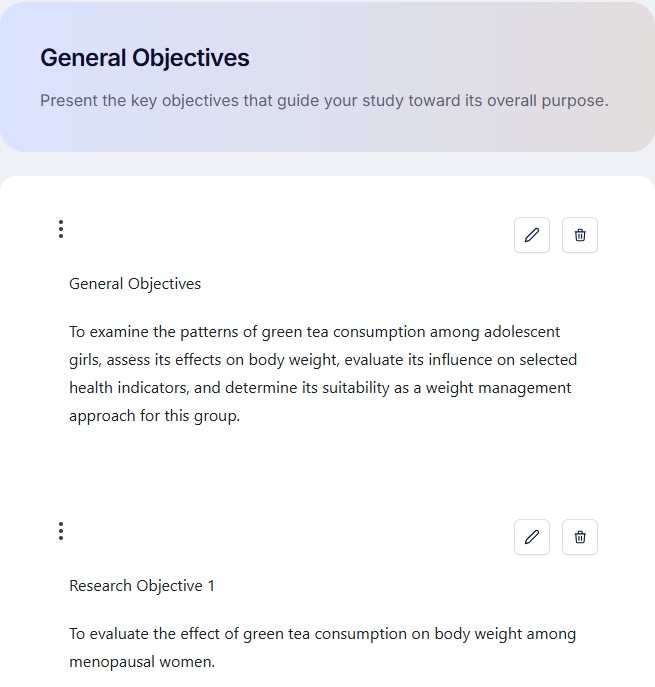
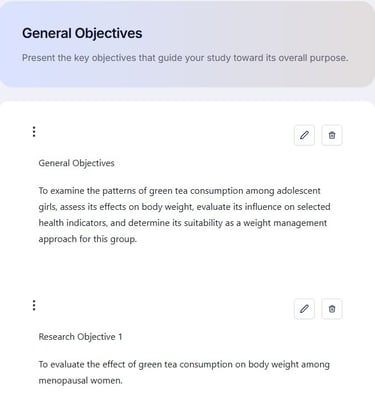
General Objectives
Write general objectives related to the study. All general objectives and research objectives specified here are available in other editors within Academique.
HELP (General Objectives)
Purpose: Break the aim into measurable components.
Action: List specific objectives that support the aim.
Outcome: Clear, actionable research objectives.
Next Step: Proceed to Reports.